
The Ultimate Guide to Industrial Reverse Osmosis Systems in Cincinnati: Design, Installation, and Maintenance
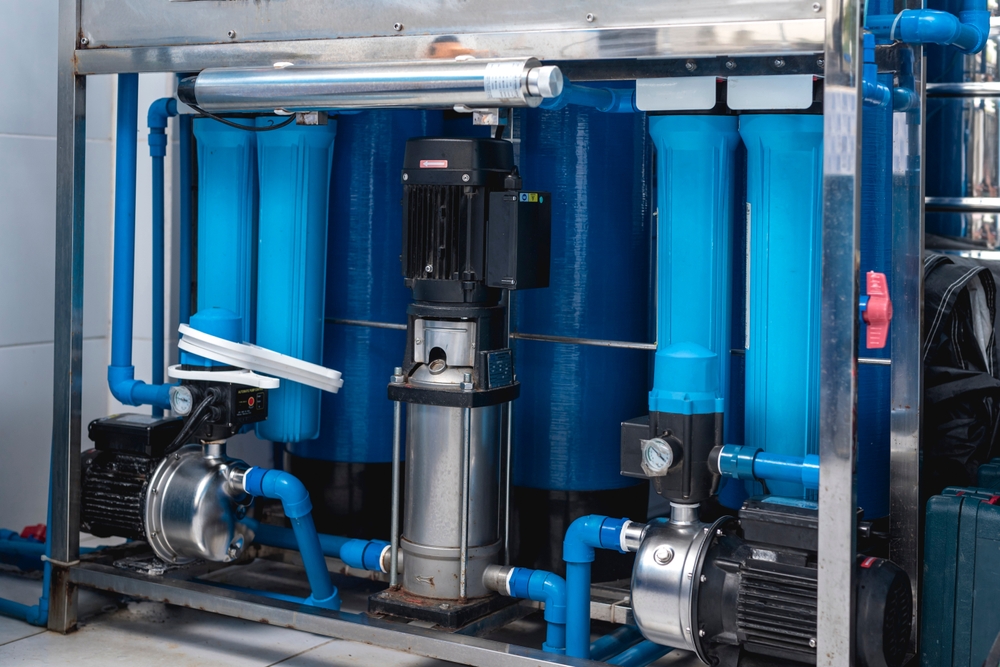
Industrial facilities depend on water for far more than drinking and sanitation. Water quality can affect boilers, cooling systems, manufacturing processes, rinsing operations, equipment life, product consistency, and operating costs.
For facilities in Cincinnati and the surrounding region, an industrial reverse osmosis system can provide a controlled, repeatable approach to reducing dissolved minerals and other unwanted constituents before water reaches critical processes.
Quick answer: An industrial reverse osmosis system uses pressure and semipermeable membranes to separate dissolved substances from a feedwater stream. Effective systems are designed around actual source-water chemistry, required product-water quality, flow demand, recovery goals, pretreatment needs, and downstream processes. Proper installation establishes the operating conditions the equipment needs, while routine monitoring, membrane cleaning, filter replacement, and water testing help maintain reliable performance.
What local facility managers should know
-
Industrial RO equipment should be sized from actual operating demand and water-quality requirements rather than flow rate alone.
-
Greater Cincinnati Water Works reports different source-water characteristics depending on whether water originates from the Ohio River or the Great Miami Buried Valley Aquifer.
-
Local municipal water still contains dissolved minerals, so meeting drinking-water standards does not necessarily mean the water meets a particular industrial process specification.
-
Pretreatment is an important part of RO design because membrane fouling and scaling can reduce performance.
-
Tracking pressure, flow, conductivity, and other operating measurements can reveal declining performance before a water-quality problem becomes more disruptive.
Why Do Industrial Reverse Osmosis Systems Matter in Cincinnati?
Industrial reverse osmosis systems matter in Cincinnati because local businesses may need water quality that is substantially different from ordinary municipal drinking-water quality. Facilities using boilers, process equipment, rinsing systems, cooling equipment, laboratories, or specialized manufacturing processes can have much tighter requirements for dissolved solids and mineral content.
Greater Cincinnati Water Works serves the entire city, most of Hamilton County, portions of Butler and Warren counties, and additional areas across the Ohio River. Its water comes primarily from the Ohio River, with part of the system supplied by groundwater from the Great Miami Buried Valley Aquifer.
Those source differences make site-specific testing valuable when planning industrial water treatment.
Ultra Pure Water Technologies works with businesses that need water treatment suited to their processes and operating requirements. We evaluate the application rather than assuming every facility needs the same RO configuration.
What Does Local Water Data Tell Cincinnati Facilities?
Local water data shows that Greater Cincinnati’s municipal supply is treated to drinking-water standards but still contains naturally occurring minerals that can matter to industrial equipment and processes. Greater Cincinnati Water Works reports average hardness of approximately 126 mg/L, or 7 grains per gallon, from the Richard Miller Treatment Plant and 140 mg/L, or 8 grains per gallon, from the Charles M. Bolton Treatment Plant.
GCWW reports that roughly 88 percent of its drinking water comes from Ohio River surface water treated at the Richard Miller Treatment Plant on the east side of Hamilton County. About 12 percent comes from groundwater wells connected to the Great Miami Buried Valley Aquifer and treated at the Charles M. Bolton Treatment Plant in southern Butler County.
These figures are useful background, but they are not a substitute for testing water at an industrial facility. Private plumbing, treatment equipment, operating conditions, and a facility’s exact location can affect what reaches the process.
How Does Water Quality Affect Local Industrial Operations?
Water quality affects local industrial operations by influencing scale formation, equipment cleanliness, process consistency, heat-transfer efficiency, and the performance of downstream treatment equipment. The consequences depend on what the facility does with the water and how sensitive its processes are.
A manufacturer near the I-75 industrial corridor may have completely different requirements from a laboratory, food-processing operation, commercial laundry, or facility across the river in Northern Kentucky.
RO provides a treatment barrier designed to reduce dissolved substances before they reach those applications. The objective is not simply to produce “better” water. It is to produce water that matches a defined process requirement.
What Are the Warning Signs That an Industrial RO System Needs Attention?
Industrial RO warning signs include changes in product-water quality, declining flow, abnormal pressure readings, increasing pressure differential, and more frequent maintenance requirements. Operators should compare current measurements with the system’s established baseline rather than waiting for complete loss of performance.
Common warning signs include:
-
Product-water conductivity begins trending upward.
-
Permeate production declines under comparable operating conditions.
-
Pressure differential across pretreatment filters increases.
-
Membrane pressure requirements change noticeably.
-
Scale or deposits appear on downstream equipment.
-
Cartridge filters require replacement more frequently than expected.
-
Cleaning cycles become increasingly frequent.
-
Water-dependent processes begin producing inconsistent results.
A single unusual reading does not always indicate membrane failure. Trends across several measurements usually provide a clearer picture.
When Should a Cincinnati Facility Call a Water Treatment Professional?
A Cincinnati facility should call a water treatment professional when RO performance changes persistently, required water quality cannot be maintained, membrane fouling or scaling is suspected, or the facility plans to change production demand. Professional evaluation is also appropriate before selecting or substantially modifying an industrial RO system.
Operators can safely record pressures, flow rates, conductivity, filter condition, and other normal system readings when those checks are part of established operating procedures.
Diagnosis becomes more specialized when the problem involves membrane performance, pretreatment chemistry, sanitization, controls, pumps, recovery rates, or system redesign. Replacing membranes without identifying why performance deteriorated can leave the original cause unresolved.
What Common Conditions Affect Industrial RO Performance in Greater Cincinnati?
The most common conditions affecting industrial RO performance in Greater Cincinnati include mineral loading, feedwater variability, inadequate pretreatment, fouling, and operating conditions that do not match the original design. Each should be evaluated before changing membranes or major equipment.
1. Mineral content
GCWW reports average hardness in the range of 7 to 8 grains per gallon depending on treatment source. Calcium and magnesium are among the minerals associated with water hardness, and mineral concentration becomes relevant when determining scaling potential and pretreatment requirements.
2. Source-water differences
Facilities in Hamilton County, Butler County, Warren County, and surrounding service areas may not necessarily receive water with identical source characteristics. Water testing at the facility provides a better design basis than regional assumptions.
3. Inadequate pretreatment
RO membranes are sensitive components. Sediment, hardness, oxidants, and other feedwater characteristics may require treatment before water reaches the membranes.
4. Changing production demand
A system designed around yesterday’s production schedule may not suit an expanded production line, longer shifts, or a new process.
5. Poor monitoring
Without baseline operating records, gradual performance loss is much harder to identify.
How Should an Industrial RO System Be Designed?
An industrial RO system should be designed around measured feedwater quality, required product-water specifications, peak and average demand, available storage, pretreatment requirements, wastewater considerations, and the facility’s operating schedule. Equipment selection should follow those requirements rather than forcing the process to fit a standard package.
Important design questions include:
-
How much treated water is required per hour and per day?
-
Is demand steady or intermittent?
-
What product-water quality must be maintained?
-
What does current feedwater testing show?
-
What pretreatment is necessary?
-
Is treated-water storage required?
-
How much redundancy is appropriate?
-
Where will concentrate water be discharged?
-
How will operators monitor system performance?
-
Can equipment be accessed safely for filters, membranes, cleaning, and repairs?
For Cincinnati-area industrial facilities, answering these questions before installation can prevent expensive sizing and layout problems later.
What Does Proper Industrial RO Installation Include?
Proper industrial RO installation includes adequate utility connections, correct pretreatment sequencing, suitable drainage, accessible equipment placement, instrumentation, controls, commissioning, and verification that the system produces the required water under real operating conditions.
Installation planning should account for feed pressure, electrical requirements, floor space, storage tanks, pumps, drain capacity, piping materials, and maintenance clearance.
Commissioning is especially important. Initial pressure, flow, conductivity, temperature, and other relevant readings create a performance baseline. Those values give facility teams something meaningful to compare against months or years later.
Local permit, plumbing, electrical, backflow, and discharge requirements can vary with the facility and jurisdiction. Businesses should confirm applicable requirements with the appropriate local authorities before installation.
How Should Industrial RO Systems Be Maintained?
Industrial RO systems should be maintained through routine performance logging, pretreatment service, cartridge-filter replacement, membrane cleaning when indicated, instrument checks, and periodic verification of product-water quality. Maintenance frequency should be based on system conditions and performance rather than an arbitrary calendar alone.
A useful maintenance program may include:
-
Recording feed, concentrate, and permeate pressures and flows.
-
Monitoring product-water conductivity.
-
Checking pressure differential across filters.
-
Inspecting pretreatment equipment.
-
Replacing consumables according to condition and system requirements.
-
Cleaning membranes when normalized performance indicates the need.
-
Checking instruments and controls.
-
Inspecting for leaks, unusual noise, or pump problems.
-
Reviewing operating trends regularly.
Seasonal changes in source-water temperature can also influence membrane output, so raw flow readings should be interpreted in context.
What Results Can a Facility Expect From Industrial Reverse Osmosis?
A properly designed industrial reverse osmosis system can provide consistently lower dissolved-solids water for processes that require tighter water-quality control. Actual performance depends on feedwater chemistry, membrane selection, temperature, pressure, recovery, pretreatment, maintenance, and the required finished-water specification.
RO is therefore best viewed as part of an engineered water-treatment process rather than a universal standalone solution.
Some applications may need pretreatment before RO and polishing treatment afterward. Others may need storage and repressurization because instantaneous process demand exceeds the RO unit’s production rate.
What Industrial RO Mistakes Should Cincinnati Businesses Avoid?
Industrial RO mistakes usually begin with designing around assumptions instead of measured water quality and actual process demand. The consequence can be excessive maintenance, inadequate production, shortened membrane life, or treated water that does not meet the intended process specification.
Mistake: Sizing only for average flow.
Consequence: The system may struggle during peak production.
Better approach: Evaluate peak demand, storage, operating hours, and future capacity.
Mistake: Skipping feedwater testing.
Consequence: Pretreatment and membrane selection may be based on incomplete information.
Better approach: Test the actual facility supply.
Mistake: Treating pretreatment as optional.
Consequence: Scaling or fouling can compromise RO performance.
Better approach: Design pretreatment around feedwater conditions.
Mistake: Waiting for product water to fail.
Consequence: A gradual problem can become operational downtime.
Better approach: Track performance trends routinely.
Mistake: Replacing membranes without diagnosing the cause.
Consequence: New membranes may encounter the same conditions.
Better approach: Determine why performance declined first.
What Is a Common Industrial RO Scenario in Cincinnati?
A common Cincinnati industrial RO scenario begins when a facility experiences increasing water demand or discovers that existing treatment no longer provides consistent process water. The facility may also be adding equipment with tighter water specifications than its previous operations required.
A proper evaluation would start with current water testing and operating requirements. Flow demand, peak usage, available space, pretreatment, storage, controls, and discharge conditions would then be reviewed before an RO configuration is selected.
This is a representative local scenario, not a specific Ultra Pure Water Technologies customer project.
Which Water Treatment Services Support Industrial RO Systems?
Water treatment services that support industrial RO systems include water analysis, system design, pretreatment, installation, commissioning, membrane service, filter replacement, troubleshooting, maintenance, and system optimization. The right combination depends on the facility’s water source and process requirements.
At Ultra Pure Water Technologies, we can help businesses evaluate how RO fits into a broader industrial water-treatment strategy rather than treating the membrane unit as an isolated piece of equipment.
How Do You Compare Industrial RO Options?
Industrial RO options should be compared by required water quality, capacity, pretreatment, operating requirements, maintainability, controls, and total process fit rather than purchase price alone. A less expensive system that cannot consistently meet demand or protect its membranes may create higher operating costs later.
| Option | Best Fit | Key Consideration |
|---|---|---|
| Basic packaged RO | Stable, straightforward applications | Must still match feedwater and demand |
| RO with engineered pretreatment | Scaling or fouling concerns | Adds protection before membranes |
| RO with storage | Variable or high peak demand | Separates production rate from instantaneous demand |
| RO with polishing treatment | Higher-purity applications | Adds treatment after RO |
| Custom industrial system | Complex processes or capacity needs | Designed around facility-specific requirements |
Where Are Industrial RO Systems Used Around Cincinnati?
Industrial RO systems can support facilities throughout Cincinnati, Hamilton County, Butler County, Warren County, and nearby Northern Kentucky communities. Industrial areas around Sharonville, Blue Ash, Fairfield, West Chester Township, and the regional I-71 and I-75 corridors include facilities with widely different process-water requirements.
The correct treatment design should always reflect conditions at the individual site.
What Is the Cost of Ignoring RO Performance Problems?
Ignoring RO performance problems can increase filter consumption, membrane cleaning requirements, water waste, energy use, equipment stress, and the risk of process disruption. For local businesses operating production schedules, even a water-treatment problem that begins gradually can become costly if it affects downstream equipment or product quality.
Routine performance records give maintenance teams an opportunity to investigate changes before the system can no longer meet its required output.
Frequently Asked Questions
Does Cincinnati water need reverse osmosis for industrial use?
Industrial use may require reverse osmosis even though Cincinnati municipal water meets drinking-water standards. The decision depends on the process specification, not whether municipal water is safe to drink. Boilers, manufacturing processes, rinsing operations, laboratories, and other applications may require substantially lower dissolved-mineral levels.
How hard is Cincinnati municipal water?
Greater Cincinnati Water Works reports average hardness of about 126 mg/L, or 7 grains per gallon, from the Richard Miller Treatment Plant and approximately 140 mg/L, or 8 grains per gallon, from the Charles M. Bolton Treatment Plant. Actual conditions at an industrial facility should be verified through site-specific testing.
Where does Cincinnati’s municipal water come from?
Greater Cincinnati Water Works obtains most of its water from the Ohio River and a smaller portion from the Great Miami Buried Valley Aquifer. GCWW reports that the Richard Miller Treatment Plant supplies about 88 percent of customer water, while the Charles M. Bolton Treatment Plant supplies about 12 percent.
How often should industrial RO membranes be replaced?
Industrial RO membranes should be replaced based on performance and condition rather than a universal replacement interval. Feedwater chemistry, pretreatment, operating pressure, recovery, cleaning practices, temperature, and production demands all influence membrane performance. Trending normalized system data helps determine whether cleaning, troubleshooting, or replacement is appropriate.
What pretreatment does an industrial RO system need?
Industrial RO pretreatment depends on the facility’s feedwater analysis and membrane requirements. Treatment may address sediment, hardness, oxidants, or other conditions that could cause scaling, fouling, or membrane damage. A water analysis should therefore be completed before specifying the pretreatment train.
Can an industrial RO system handle changing production demand?
An industrial RO system can accommodate changing production demand when capacity, storage, controls, and operating schedules are designed accordingly. Facilities expecting expansion should discuss future demand during the design stage. Adding appropriate capacity or storage initially may be more practical than redesigning an undersized treatment system later.
Do industrial facilities in Hamilton and Butler counties have the same water?
Industrial facilities in Hamilton and Butler counties should not assume identical feedwater characteristics. Greater Cincinnati Water Works uses both Ohio River surface water and Great Miami Buried Valley Aquifer groundwater, with service areas influenced by the respective treatment plants. Testing water at the actual facility provides the most useful design information.
What should Cincinnati facility managers monitor on an RO system?
Cincinnati facility managers should monitor measurements such as feed pressure, permeate and concentrate flow, product-water conductivity, filter pressure differential, and other manufacturer-specified operating parameters. Recording consistent data allows operators to recognize trends and distinguish normal variations, including temperature-related changes, from developing treatment problems.
Build a More Reliable Industrial Water Treatment Strategy
Industrial reverse osmosis works best when design, installation, and maintenance are treated as one continuous process. For facilities across the Greater Cincinnati region, starting with actual feedwater conditions and clearly defined process requirements provides a stronger foundation for reliable treatment.
Get Industrial RO Performance Built Around Your Cincinnati Facility
We help area businesses evaluate industrial water-treatment requirements with the goal of producing the right water quality for the process and maintaining dependable system operation.
Categorised in: Industrial RO
This post was written by admin