
Commercial & Industrial Water Purification in Cincinnati: Custom Systems for High-Spec Industries
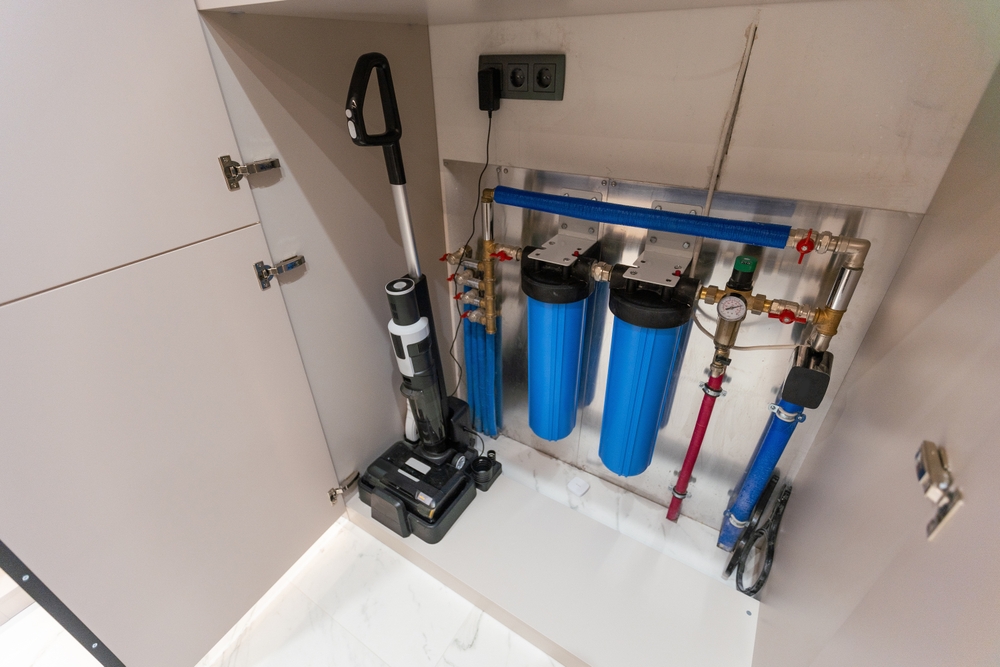
Water quality can directly affect production consistency, equipment life, sanitation, and regulatory performance for facilities throughout Cincinnati. Manufacturers, laboratories, healthcare operations, food processors, and other high-spec industries often need more than standard filtration because their processes depend on water that meets precise operating requirements.
Commercial and industrial water purification systems are designed around a facility’s incoming water, production demands, flow rates, operating schedule, and required water quality. A properly specified system may combine pretreatment, filtration, softening, reverse osmosis, deionization, ultraviolet treatment, storage, distribution, and monitoring to deliver consistent process water.
What Local Facility Managers Should Know
-
Industrial water treatment should be designed around the application rather than selected as a one-size-fits-all product.
-
Water conditions, infrastructure, and source characteristics can vary across Cincinnati, Hamilton County, and nearby communities.
-
Seasonal temperature changes and fluctuating production demand can affect system sizing and performance.
-
Pretreatment is often essential for protecting reverse osmosis membranes, polishing equipment, and downstream processes.
-
Routine testing and monitoring help facilities identify changes before they lead to product-quality issues or unplanned downtime.
Why Does Industrial Water Purification Matter in Cincinnati?
Industrial water purification matters in Cincinnati because local facilities rely on water for processing, rinsing, cooling, cleaning, formulation, sterilization, boiler feed, and other critical operations. Even when incoming water is suitable for general commercial use, it may not meet the tighter specifications required by advanced manufacturing or controlled production environments.
The region supports a broad range of operations, from healthcare and laboratory facilities near the urban core to manufacturing sites along the Interstate 75 corridor. Industrial properties in Sharonville, Blue Ash, Norwood, Queensgate, West Chester, and Mason may have very different equipment, water demand, and space constraints.
For high-spec operations, small variations in hardness, dissolved minerals, conductivity, chlorine, sediment, or microbiological conditions can create larger process problems. These may include spotting on finished products, scale inside equipment, inconsistent rinse quality, shortened membrane life, unreliable analytical results, or added maintenance.
Ultra Pure Water Technologies helps commercial and industrial customers evaluate these challenges and develop water treatment approaches based on their facility and application. We focus on matching the treatment process to the required water quality rather than assuming that one standard configuration will work for every operation.
What Do Local Water Conditions Mean for High-Spec Facilities?
Local water conditions mean that each facility should begin with testing and process requirements before equipment is selected. Municipal water may be appropriate for many everyday uses, but industrial applications often require additional treatment to control hardness, dissolved solids, chlorine, particulates, or other constituents.
Public water quality reports provide useful general information about a distribution system, but they do not replace testing at the point where water enters a facility. Building plumbing, storage, production schedules, equipment condition, and changes within a distribution network can influence the water that reaches a specific process.
From a field-planning perspective, facilities near the Ohio River, central Hamilton County, Northern Kentucky, and the northern suburbs may also differ in source water, utility service, building age, and internal piping. A site-specific sample provides a clearer basis for system design.
How Can Inadequate Water Treatment Affect a Local Operation?
Inadequate water treatment can affect a local operation through inconsistent product quality, equipment scaling, higher cleaning demands, premature component failure, and production interruptions. The impact depends on how water is used and how sensitive the process is to contaminants or mineral content.
A machine shop may experience residue on parts after rinsing. A laboratory may need tighter conductivity control. A food or beverage facility may need reliable treatment for ingredient water or sanitation processes. A healthcare operation may require water prepared for specific equipment or support applications.
In Cincinnati facilities that operate multiple shifts, even a brief interruption can disrupt production scheduling and labor planning. Water system reliability should therefore be considered part of operational continuity, not simply a utility concern.
What Warning Signs Suggest a Purification System Needs Attention?
Warning signs that a purification system needs attention include changes in water quality, equipment performance, pressure, flow, conductivity, or maintenance frequency. Facility teams should investigate recurring issues rather than repeatedly treating the symptoms.
Common warning signs include:
-
Scale appearing on heaters, piping, valves, or process equipment
-
Spotting, streaking, or residue on rinsed components
-
Conductivity or resistivity readings moving outside the target range
-
Reduced product flow or declining system recovery
-
More frequent filter or membrane replacement
-
Unusual taste, odor, color, or turbidity in process water
-
Inconsistent results between production batches
-
Increased boiler, cooling, cleaning, or sanitation maintenance
A single warning sign does not always identify the cause. Testing and system evaluation can help determine whether the issue begins with incoming water, pretreatment, purification equipment, storage, distribution piping, or the production process itself.
When Should a Cincinnati Facility Call a Water Treatment Professional?
A Cincinnati facility should call a water treatment professional when water quality affects production, equipment, compliance requirements, or repeatability. Professional support is also appropriate before installing new process equipment, expanding production, relocating a line, or changing a product specification.
Facility personnel can safely monitor gauges, check alarms, record conductivity, observe flow rates, and complete approved routine maintenance. Diagnostics involving chemical dosing, electrical components, pressure vessels, membrane performance, sanitization, or process validation should be handled according to the equipment manufacturer’s procedures and the facility’s safety policies.
Early evaluation is especially useful when a plant is planning a capital project. Treatment equipment, storage tanks, pumps, drains, electrical service, controls, and distribution loops may all require coordination with the broader facility design.
What Are the Most Common Causes of Industrial Water Problems?
The most common causes of industrial water problems are incomplete pretreatment, changing demand, aging components, poor monitoring, and a mismatch between system design and process specifications. These issues can occur independently or combine over time.
1. Hardness and mineral scale
Calcium and magnesium can create scale in heaters, boilers, membranes, piping, and production equipment. Softening or other pretreatment may be used when hardness threatens downstream performance.
2. Sediment and suspended material
Particulates can load filters, restrict valves, foul membranes, and interfere with sensitive processes. The appropriate filtration level depends on the incoming water and equipment requirements.
3. Chlorine or other oxidants
Disinfectant residuals may need to be reduced before certain membranes, resins, formulations, or processes. Carbon treatment is one possible approach, although system selection should be based on testing and operating conditions.
4. Dissolved solids
Elevated dissolved mineral content can affect rinsing, spotting, conductivity, boiler operation, and product formulation. Reverse osmosis is commonly considered when significant dissolved-solids reduction is required.
5. Variable production demand
A system may struggle when production expands beyond its original design. Facilities in Greater Cincinnati should evaluate peak flow, daily volume, storage needs, regeneration schedules, and planned growth.
6. Distribution system contamination
Purified water can lose quality after treatment if storage tanks, piping, dead legs, vents, or distribution components are not properly designed and maintained.
How Can Facilities Prevent Water Quality Problems?
Facilities can prevent water quality problems by testing regularly, documenting system performance, completing scheduled maintenance, and reviewing treatment capacity when production changes. Preventive work is usually more manageable than diagnosing a failure during a critical production run.
Useful practices include checking pressure differentials, tracking filter life, recording conductivity, inspecting for leaks, maintaining pretreatment equipment, and following sanitization procedures. Seasonal shutdowns and planned maintenance periods can provide a practical time for deeper inspections.
Before winter, local facilities should also review piping or equipment located in loading areas, mechanical rooms, or other spaces that may be exposed to cold conditions. Freeze protection is separate from purification performance, but a frozen line can still interrupt the entire water process.
DIY work should stop when maintenance requires opening pressure vessels, altering controls, changing chemical feed settings, diagnosing membrane rejection, or entering areas covered by facility safety restrictions.
What Results Can a Custom Water Purification System Deliver?
A custom water purification system can deliver more consistent water quality, better protection for process equipment, improved monitoring, and a treatment capacity aligned with actual production demand. Results depend on the incoming water, system design, operating practices, and required specification.
A well-planned system may reduce scale, lower dissolved solids, remove particulates, control chlorine, improve rinse quality, or support tighter conductivity targets. It may also simplify maintenance by giving operators clearer data and more appropriate pretreatment.
No purification system eliminates the need for testing and service. High-spec performance depends on ongoing monitoring, timely component replacement, correct operating procedures, and periodic review as facility needs change.
What Mistakes Should Local Facility Managers Avoid?
The biggest mistakes are selecting equipment by price alone, skipping water testing, undersizing capacity, and ignoring downstream distribution.
Mistake: Buying a standard system without confirming the required water specification.
Consequence: The equipment may produce water that is cleaner but still unsuitable for the process.
Better approach: Define the application, target quality, peak flow, and daily demand first.
Mistake: Focusing only on purification equipment.
Consequence: Inadequate pretreatment may cause scaling, fouling, short membrane life, or excessive maintenance.
Better approach: Evaluate the entire treatment train.
Mistake: Designing around average demand.
Consequence: The facility may lose pressure or run out of treated water during peak production.
Better approach: Account for peak flow, storage, recovery time, and future expansion.
Mistake: Ignoring tanks and distribution piping.
Consequence: Water quality may decline after treatment.
Better approach: Treat storage and distribution as part of the complete system.
What Is a Common Local Industrial Water Scenario?
A common local scenario is a growing manufacturer that adds equipment without updating its original water treatment system. The existing system may continue producing acceptable water during light use but struggle when multiple lines operate at once.
Operators might notice lower pressure, longer recovery periods, more frequent alarms, or declining rinse quality. Replacing a single filter may provide temporary improvement without solving the capacity problem.
A complete evaluation would review incoming water, pretreatment, purification output, storage volume, pump capacity, distribution piping, peak demand, and the specifications of the new equipment. This is a common scenario rather than a description of a specific customer project.
Which Water Treatment Solutions Support High-Spec Industries?
Water treatment solutions for high-spec industries may include softening, particulate filtration, carbon treatment, reverse osmosis, deionization, ultraviolet treatment, storage, pumping, controls, and distribution components. The correct combination depends on the water analysis and process requirements.
Reverse osmosis may be appropriate for reducing dissolved solids. Deionization can provide additional polishing when lower conductivity is required. Ultraviolet systems may support microbiological control in certain applications. Filtration and softening can protect downstream equipment.
We can also evaluate how equipment will fit within the available mechanical space, connect to existing utilities, and support the facility’s operating schedule.
How Do Custom Systems Compare With Standard Equipment?
Custom systems provide greater control over capacity, pretreatment, controls, redundancy, and water specifications, while standard equipment may be suitable for simpler applications with predictable demand.
A standard unit can be a practical choice when the incoming water, flow rate, and required output fall within a defined operating range. A custom configuration becomes more valuable when the process has strict quality limits, variable production, limited space, multiple points of use, or planned expansion.
For high-spec facilities, the lowest initial equipment price may not represent the lowest operating risk. System life, consumable use, maintenance access, monitoring, and downtime should be considered alongside purchase cost.
Which Areas Can Be Served Around Cincinnati?
Commercial and industrial water purification needs extend throughout Cincinnati and the surrounding region, including Hamilton County, Blue Ash, Sharonville, Norwood, West Chester, Mason, and nearby Northern Kentucky communities. Service availability for a specific location should be confirmed directly.
Facilities throughout the regional manufacturing and commercial corridors can benefit from an application-based water treatment review.
What Is the Cost of Ignoring an Industrial Water Problem?
The cost of ignoring an industrial water problem can include damaged equipment, rejected production, excessive cleaning, shortened membrane life, higher consumable use, and unplanned downtime. The financial effect is often greater when water quality is tied directly to a finished product or validated process.
Waiting can also make diagnosis more difficult. A minor pretreatment issue may eventually affect membranes, storage, piping, and production equipment. Documenting changes and investigating them early can reduce the number of variables involved.
Frequently Asked Questions
What industries use purified water in Cincinnati?
Manufacturers, laboratories, healthcare facilities, food and beverage operations, metal finishers, electronics-related businesses, boiler operators, and other high-spec facilities may use purified water. The required treatment level depends on whether the water is used for rinsing, formulation, cleaning, cooling, sterilization, testing, or equipment feed.
Is Cincinnati tap water suitable for industrial processes?
Cincinnati tap water may be suitable for general facility use, but not every industrial process. Applications with tight limits for hardness, conductivity, dissolved solids, chlorine, particulates, or microbiological conditions often require additional treatment. Point-of-use testing and process specifications should guide the decision.
What is the difference between reverse osmosis and deionization?
Reverse osmosis uses a membrane to reduce many dissolved substances, while deionization uses ion-exchange media to remove charged minerals from water. Some high-purity systems use reverse osmosis first and deionization as a polishing step. The correct arrangement depends on the required output and operating cost.
How often should an industrial water system be tested?
An industrial water system should be tested according to process sensitivity, equipment requirements, operating history, and the facility’s quality procedures. Critical applications may require continuous monitoring, while other systems use scheduled sampling. Incoming water should also be retested when performance changes or major facility modifications occur.
Can a water system be expanded as a Cincinnati plant grows?
A water system can often be expanded, but the feasibility depends on the original design, available space, electrical capacity, drainage, storage, pumps, controls, and distribution piping. Facilities planning an expansion should review water demand early so purification capacity does not become a production bottleneck.
Why does my facility’s reverse osmosis output keep decreasing?
Decreasing reverse osmosis output may result from colder feed water, fouled filters, scaling, membrane deterioration, pressure changes, or altered incoming water conditions. Because Greater Cincinnati experiences seasonal temperature changes, operators should compare performance with normalized system data rather than flow alone.
Do facilities in Hamilton County always need water softening?
Facilities in Hamilton County do not always need water softening. The decision depends on measured hardness, the type of downstream equipment, operating temperature, membrane design, chemical use, and process requirements. A water analysis and equipment review can determine whether softening or another pretreatment method is appropriate.
How much space does an industrial purification system require?
Space requirements vary widely based on flow rate, treatment stages, storage volume, redundancy, and maintenance access. A small point-of-use system may fit near one process, while a centralized system may require tanks, pumps, pretreatment vessels, controls, and a dedicated mechanical area.
Build a More Reliable Water Process for Your Cincinnati Facility
A properly designed purification system can help local facilities protect equipment, maintain consistent water quality, and prepare for future production needs. We evaluate the complete water process so treatment decisions are based on the facility’s actual application.
Categorised in: Water Purification
This post was written by admin