
Reducing Facility Overhead: The ROI of Industrial Water Softener Systems for Cincinnati Manufacturers
Cincinnati manufacturers face a challenge that does not always show up as a line item on a budget report, but its financial impact is very real. The Greater Cincinnati region draws its water supply from the Ohio River and local aquifers, both of which carry significant mineral content. Calcium and magnesium concentrations in the area consistently register as moderately to severely hard, and for industrial operations running boilers, cooling towers, heat exchangers, and process equipment, that hardness translates directly into cost.
Hard water scale prevention is not a luxury consideration for Ohio manufacturers. It is an operational necessity. When mineral deposits accumulate inside pipes and on heating elements, thermal efficiency drops, energy consumption rises, and equipment service life shortens. A layer of scale just one quarter of an inch thick can reduce heat transfer efficiency by as much as 40 percent, according to industry engineering data. Multiply that inefficiency across a large facility running continuous operations, and the monthly energy bill tells a story that justifies serious investment in commercial water treatment.
The good news is that manufacturing water treatment through a properly sized industrial water softener system delivers measurable, trackable returns. Cincinnati operations that have made this investment consistently report lower utility costs, reduced maintenance frequency, and extended equipment lifespan. Understanding how to calculate and communicate that return on investment is the first step toward making a compelling case to facility leadership.
What Industrial Water Softener Systems Actually Do
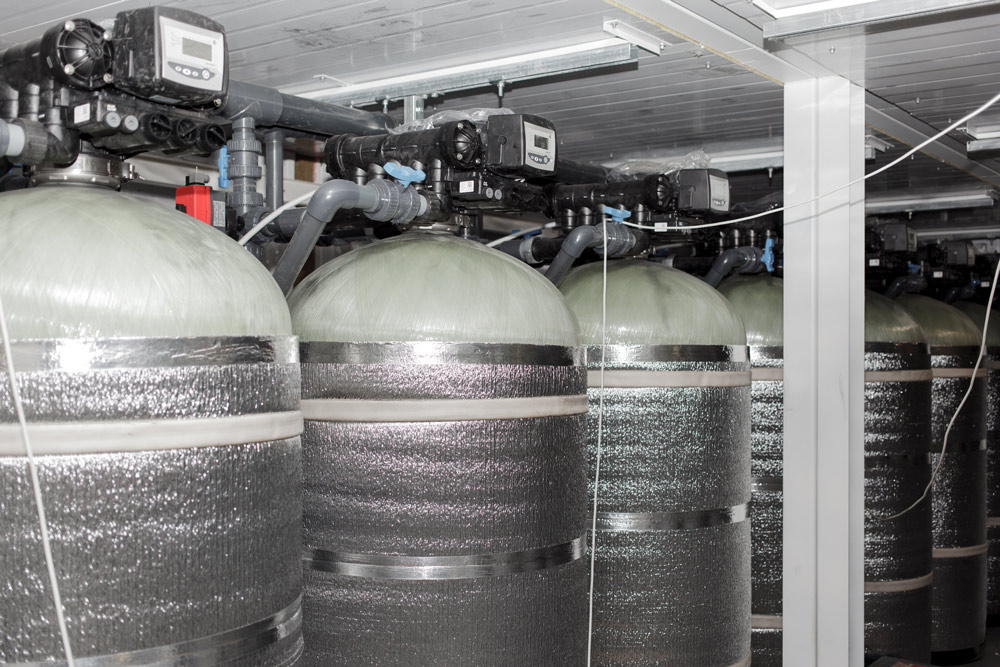
An industrial water softener works through a process called ion exchange. Hard water passes through a resin bed loaded with sodium ions. As the water moves through the resin, calcium and magnesium ions are captured and exchanged for sodium ions, producing softened water that no longer causes scale formation. The resin is periodically regenerated using a salt brine solution, which flushes the captured minerals and recharges the system for continued operation.
For Cincinnati manufacturers, the scale of this process matters enormously. A residential softener handles a few gallons per minute. Industrial systems are engineered to deliver tens of thousands of gallons per day at consistent flow rates and softness levels, even under the variable demand patterns that large facilities generate. Commercial water filtration systems paired with softening units can also address additional contaminants, including sediment, chlorine, and organic compounds that affect product quality or process integrity.
The right system for a given Cincinnati facility depends on several variables: incoming water hardness, daily water consumption, peak flow demand, the specific processes being served, and the level of automation the operation requires. A well-specified system will regenerate based on actual usage data rather than on a fixed schedule, which conserves salt, reduces wastewater discharge, and keeps operating costs predictable.
Calculating the Real ROI for Ohio Manufacturing Operations
Return on investment analysis for manufacturing water treatment begins with identifying all the cost centers that hard water affects. Energy consumption is typically the largest factor. Boilers operating with scaled heat transfer surfaces must burn more fuel to achieve the same output. Cooling towers accumulate mineral deposits that restrict flow and reduce cooling capacity, forcing compressors to work harder. Process water heaters see the same effect. Across a mid-size Cincinnati manufacturing facility, the combined energy penalty from unaddressed scale can run into tens of thousands of dollars annually.
Equipment maintenance and replacement represent a second major cost category. Descaling procedures require labor hours, chemical inputs, and downtime. In some cases, scale buildup causes irreversible damage to components that must be replaced entirely. Pump seals, valve seats, and heat exchanger tubes are particularly vulnerable. When maintenance teams track time spent on scale-related work, the labor cost alone often surprises facility managers who had not previously connected those hours to water quality.
Product quality losses, where applicable, constitute a third cost stream. Food and beverage processors, pharmaceutical manufacturers, and electronics producers in the Cincinnati area often find that incoming water hardness directly affects yield, rework rates, or compliance with customer specifications. Commercial water filtration systems that address both hardness and other water quality parameters can eliminate costly rework cycles and reduce the volume of finished product that fails inspection.
Against these documented cost centers, the capital and operating costs of an industrial water softener system begin to look very favorable. Capital costs for properly sized industrial equipment vary based on capacity and configuration, but the payback period for many Cincinnati installations falls in the range of one to three years when all affected cost categories are included in the analysis. After payback, the ongoing savings contribute directly to reduced overhead and improved facility margin.
Operational Benefits Beyond the Spreadsheet
The financial case for commercial water treatment in Cincinnati manufacturing is strong on its own, but experienced facility managers point to operational benefits that do not always appear in formal ROI calculations. Predictability is one of them. When water quality is controlled upstream, maintenance planning becomes more reliable. Equipment behaves as designed. Scheduled maintenance intervals actually hold. Emergency repairs become less frequent.
Water-using equipment also tends to retain its original performance characteristics much longer when scale is eliminated. A boiler that might require a complete tube bundle replacement after eight years of hard water service can realistically serve a facility for fifteen or twenty years when proper softening is in place from installation. That extended service life reduces capital expenditure on replacement equipment and keeps facility depreciation schedules more favorable.
Sustainability performance is another benefit that Cincinnati manufacturers are increasingly factoring into their operational strategies. Facilities that reduce energy consumption through better heat transfer efficiency lower their carbon footprint without any sacrifice in output. Companies pursuing environmental certifications or responding to customer sustainability requirements find that manufacturing water treatment investments support those goals in a quantifiable way.
Staff productivity also improves in facilities where scale-related maintenance has been reduced. Maintenance technicians freed from repetitive descaling work can focus on higher-value preventive maintenance activities that further extend equipment life and reduce unplanned downtime across the facility.
Choosing the Right Commercial Water Treatment Partner in Cincinnati
Selecting an industrial water softener system is not a purchase that benefits from a generic catalog approach. Cincinnati manufacturers are best served by working with commercial water treatment specialists who understand Ohio water chemistry, local regulatory requirements for wastewater discharge, and the specific demands of industrial applications. The difference between a properly engineered system and an undersized or poorly configured one is often the difference between a compelling ROI and a frustrating maintenance burden.
A qualified commercial water filtration systems provider will begin with a thorough water analysis that goes beyond basic hardness measurement. They will assess flow rates, pressure requirements, temperature ranges, and the full range of contaminants present in the source water. They will size equipment to handle peak demand without sacrificing softness quality, and they will design the regeneration cycle to minimize salt and water consumption.
Service capability matters as much as equipment quality for long-term results. Industrial systems require periodic resin replacement, brine system maintenance, and control system updates. A provider with local technicians who understand Cincinnati-area water conditions and can respond quickly to service needs protects the facility’s investment and ensures that the system continues to deliver the performance the ROI analysis assumed.
Financing and lease options have also become more accessible for industrial water treatment equipment, which reduces the barrier for facilities that want to capture ongoing savings but face near-term capital constraints. Many Cincinnati manufacturers find that structured agreements allow them to fund system costs from the operational savings the equipment generates from its first month of service.
Making the Investment Work for Your Facility
The case for industrial water softener systems in Cincinnati manufacturing is not theoretical. It is grounded in the documented costs of scale formation, the measurable performance of ion exchange technology, and the operational experience of facilities that have made this investment and tracked the results over time.
For Cincinnati manufacturers serious about reducing facility overhead, a water quality assessment is the logical first step. Understanding exactly how hard water is affecting your specific operation puts real numbers behind the conversation and transforms water treatment from a vague operational concern into a clear, fundable capital project with a defined payback horizon and measurable ongoing returns.
Need Industrial & Commercial Water Purification in Cincinnati, OH?
Since 1999, Ultra Pure Water Technologies, LLC has been one of the best water purification business throughout the state of Ohio and beyond. Ultra Pure Water Technologies, LLC specializes in the sale, design, installation, maintenance, and service of commercial, industrial, and medical water pre-treatment and filtration systems. We offer water softeners, water filter replacements, carbon filtration, reverse osmosis, and deionization. Some of the products we have available include USP type-I, II, and II water and DI exchange tanks. We are a member of the Water Quality Association. Call in today for a free estimate!
Categorised in: Water Softener
This post was written by admin