
How Deionization and RO Improve Industrial Manufacturing Processes
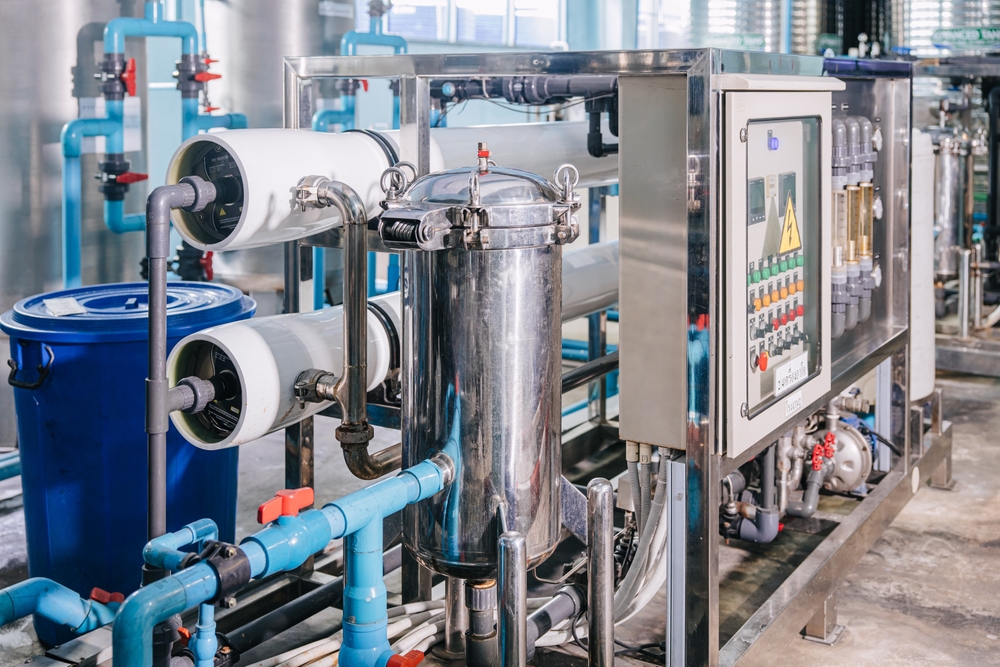
Water is one of the most critical inputs in modern industrial manufacturing, yet it is often one of the most overlooked. Whether you are producing pharmaceuticals, semiconductors, automotive components, or food and beverage products, the quality of your process water directly affects product consistency, equipment longevity, and operational efficiency. Across Ohio and beyond, manufacturers are turning to advanced industrial water purification solutions to gain a competitive edge.
Two of the most effective technologies available today are deionization systems and reverse osmosis treatment, and understanding how they work can help your facility make smarter infrastructure decisions.
Why Water Quality Matters in Industrial Settings
Tap water and even standard filtered water contain dissolved minerals, organic compounds, chlorine, heavy metals, and biological contaminants. In everyday life, these trace elements are largely harmless. In a manufacturing environment, however, they can cause serious problems. Hard water minerals like calcium and magnesium scale up on heat exchangers and boilers, reducing thermal efficiency and increasing maintenance costs. Chlorine corrodes stainless steel components. Dissolved silica interferes with semiconductor fabrication. Even small concentrations of ionic contaminants can compromise chemical reactions, alter product pH, and reduce the effectiveness of cleaning agents.
Facilities in Cincinnati and throughout Ohio have experienced firsthand how untreated or inadequately treated water leads to costly downtime, product rejections, and equipment failures. Water treatment services that address these challenges at the source are not simply a luxury; they are a necessity for any operation that demands consistency and precision. The question is not whether you need water treatment, but which technologies best match your specific process requirements.
Understanding Deionization Systems and How They Work
Deionization, often abbreviated as DI, is a water purification process that removes dissolved ionic contaminants using ion exchange resins. These resins are specially charged materials that attract and capture positively charged cations (such as calcium, magnesium, sodium, and iron) and negatively charged anions (such as chloride, sulfate, and bicarbonate). As water passes through the resin beds, the unwanted ions are exchanged for hydrogen and hydroxide ions, which combine to form pure water.
Deionization systems are available in several configurations, including single-bed, mixed-bed, and two-bed setups. Mixed-bed deionizers are particularly effective because they combine both cation and anion resins in a single vessel, producing exceptionally high-purity water with very low conductivity. This level of purity is critical in industries such as electronics manufacturing, laboratory research, and pharmaceutical production, where even trace amounts of ionic contamination can ruin a batch or damage sensitive components.
One key advantage of deionization systems is their ability to produce ultrapure water on demand. Industrial facilities in Cincinnati and across Ohio rely on these systems for applications including rinse water in metal finishing, boiler feed water preparation, and reagent water for quality control labs. Deionization also integrates well with other treatment technologies, particularly reverse osmosis treatment, to create a multi-stage purification process that delivers consistently high results.
How Reverse Osmosis Treatment Enhances Manufacturing Operations
Reverse osmosis (RO) is a pressure-driven membrane filtration process that separates water molecules from dissolved solids, salts, organics, and many microorganisms. In standard osmosis, water naturally moves from a less concentrated solution to a more concentrated one across a semipermeable membrane. Reverse osmosis flips this process by applying pressure to force water through the membrane in the opposite direction, leaving contaminants behind in a concentrated reject stream.
RO systems are remarkably effective, typically removing between 90 and 99 percent of dissolved solids, depending on the membrane type and operating conditions. This makes reverse osmosis treatment one of the most versatile tools in industrial water purification. It addresses a wide range of contaminants simultaneously, reducing the burden on downstream polishing equipment like deionizers and extending the life of ion exchange resins.
For manufacturers in Ohio, RO systems offer both performance and economic benefits. By removing the bulk of dissolved solids before water enters a deionization stage, facilities reduce the frequency of resin regeneration and replacement, which lowers operating costs over time. RO systems also reduce scaling in downstream equipment, protect boilers and cooling towers, and support sustainability goals by reducing chemical consumption. In water-intensive industries such as automotive manufacturing, food processing, and power generation, these savings can be substantial.
Combining Deionization and RO for Maximum Purity
When deionization and reverse osmosis treatment are used together, the result is a highly effective, multi-barrier water purification strategy that outperforms either technology on its own. A typical configuration involves using an RO system as a primary treatment stage to remove the majority of dissolved solids and organics, followed by a mixed-bed deionizer as a polishing stage to bring water quality to ultrapure levels.
This combination is particularly valuable in precision manufacturing environments. In semiconductor fabrication, for example, water used in wafer rinsing must meet extremely strict purity standards, often measured in parts per trillion. A single RO pass followed by deionization can achieve resistivity levels above 18 megohm-centimeters, which represents essentially pure water. Similar requirements exist in the production of injectable pharmaceuticals, where water for injection (WFI) must meet USP standards that leave no room for ionic or organic contamination.
Facilities throughout Cincinnati and the broader Ohio region that have adopted integrated industrial water purification systems report measurable improvements in product quality, fewer equipment failures, and reduced maintenance intervals. Water treatment services that design and install these combined systems take into account each facility’s unique water source, process demands, and volume requirements, ensuring that the solution is both technically sound and cost-effective.
Beyond purity, the combination of RO and deionization also supports regulatory compliance. Many industries are subject to strict water quality standards from bodies such as the FDA, EPA, and ASTM. Having a documented, validated water treatment system in place provides the audit trail and consistency that regulators require. For manufacturers looking to expand into new markets or achieve certifications such as ISO or GMP compliance, a reliable water treatment infrastructure is often a prerequisite.
Choosing the Right Water Treatment Services for Your Facility
Selecting the right water treatment services provider is just as important as choosing the right technology. Every manufacturing facility has unique needs based on its feedwater quality, production volume, process sensitivity, and budget constraints. A qualified provider will conduct a thorough water analysis, evaluate your current infrastructure, and design a system that addresses your specific challenges without over-engineering or undersizing the solution.
In Cincinnati and across Ohio, manufacturers benefit from working with local providers who understand the regional water chemistry. Municipal water sources in the Midwest often contain elevated levels of hardness minerals and chloramine disinfectants, which require specific pretreatment strategies before RO membranes and deionization resins can operate at peak efficiency. A provider with local expertise can anticipate these challenges and build them into the system design from the start.
Ongoing service and support are equally important. Deionization systems require periodic resin regeneration or replacement, RO membranes need routine cleaning and eventual replacement, and pre-filters must be monitored and changed on schedule. A reliable service partner will keep your system running at optimal performance, provide regular water quality testing, and alert you to any changes that could affect your process.
Conclusion
Advanced industrial water purification is no longer optional for manufacturers who demand precision, consistency, and efficiency. Deionization systems and reverse osmosis treatment each offer significant benefits on their own, but their true power is realized when they work together as part of a comprehensive water treatment strategy. For facilities in Cincinnati, Ohio, and beyond, investing in professional water treatment services is a smart, long-term decision that pays dividends in product quality, equipment reliability, and operational savings.
Need Industrial & Commercial Water Purification in Cincinnati, OH?
Since 1999, Ultra Pure Water Technologies, LLC has been one of the best water purification business throughout the state of Ohio and beyond. Ultra Pure Water Technologies, LLC specializes in the sale, design, installation, maintenance, and service of commercial, industrial, and medical water pre-treatment and filtration systems. We offer water softeners, water filter replacements, carbon filtration, reverse osmosis, and deionization. Some of the products we have available include USP type-I, II, and II water and DI exchange tanks. We are a member of the Water Quality Association. Call in today for a free estimate!
Categorised in: Deionization, Industrial RO
This post was written by admin